
Mechanism
Ongoing research into nitrate and nitrite biology has expanded understanding of how these compounds function in the body, particularly in relation to nitric oxide production and exercise physiology. This growing body of research has increased interest in dietary nitrate in sports and performance nutrition.
Nitric oxide is a signaling molecule involved in normal physiological processes. In addition to the body’s endogenous nitric oxide pathways, dietary nitrate can also serve as a source of nitrate and nitrite through normal metabolic processes.
Dietary nitrate, including nitrate from vegetables such as beetroot and leafy greens, is absorbed and circulated in the body. A portion participates in the enterosalivary cycle, where it is converted to nitrite and can contribute to nitric oxide-related pathways under certain physiological conditions.
This biology has helped support scientific interest in the relationship between dietary nitrate intake and normal exercise-related physiology.
Research suggests that nitrite may contribute to nitric oxide-related pathways in the body through normal physiological processes. Various proteins and enzymes in blood and tissues are involved in these pathways under specific physiological conditions.
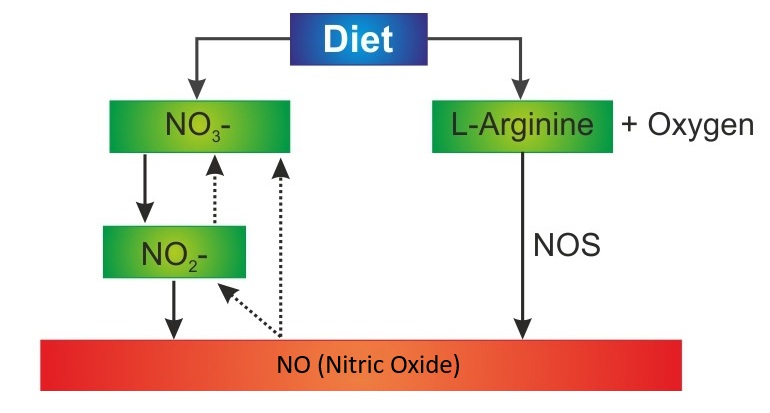
Biological Pathways of NO synthesis
(Reproduced from: Jones AM., Sports Med. 2014)